
The following materials are drawn from ongoing fieldwork for a traveling archival initiative documenting family-held collections, community archives, and living cultural traditions across the Puerto Rico archipelago.
Through a mobile laboratory equipped for digitization, photographic documentation, and oral history recording, the project works directly with families and communities to preserve historical materials that often remain outside formal institutional repositories.
These work samples reflect the project’s broader interest in how historical memory is sustained through both physical archives and cultural practice. All photographs and video included here were created and recorded by the applicant.
Many historical records in Puerto Rico persist outside institutional repositories, preserved instead through family custody and private collections. These materials, photographs, government documents, and personal writings, illustrate how community-held archives can reveal histories that complicate or challenge dominant historical narratives.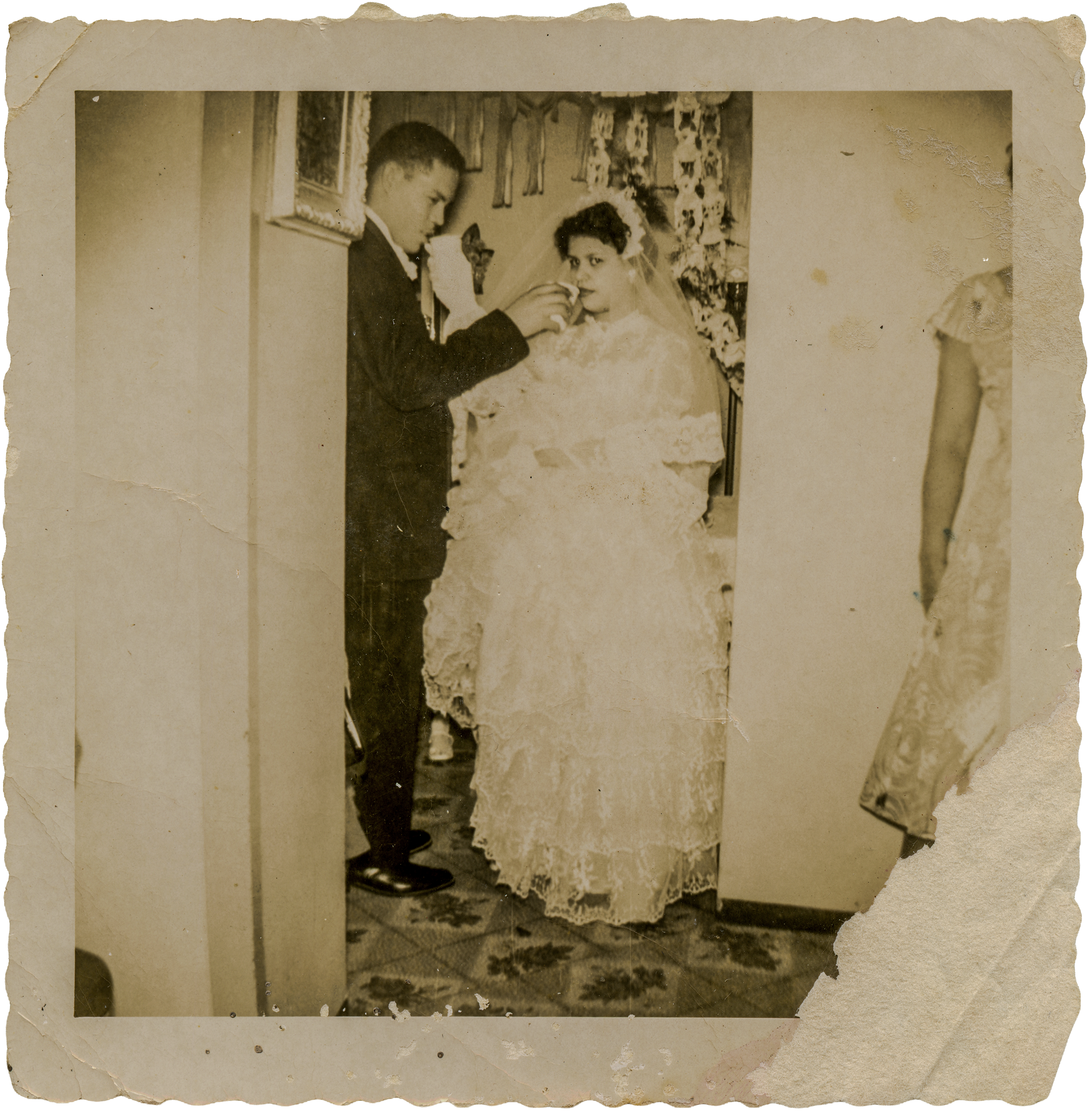
Digitized from a privately held family archive spanning custody across three generations. Photographs such as these often function as the earliest visual records preserved within families, anchoring oral histories, migration narratives, and genealogical memory.
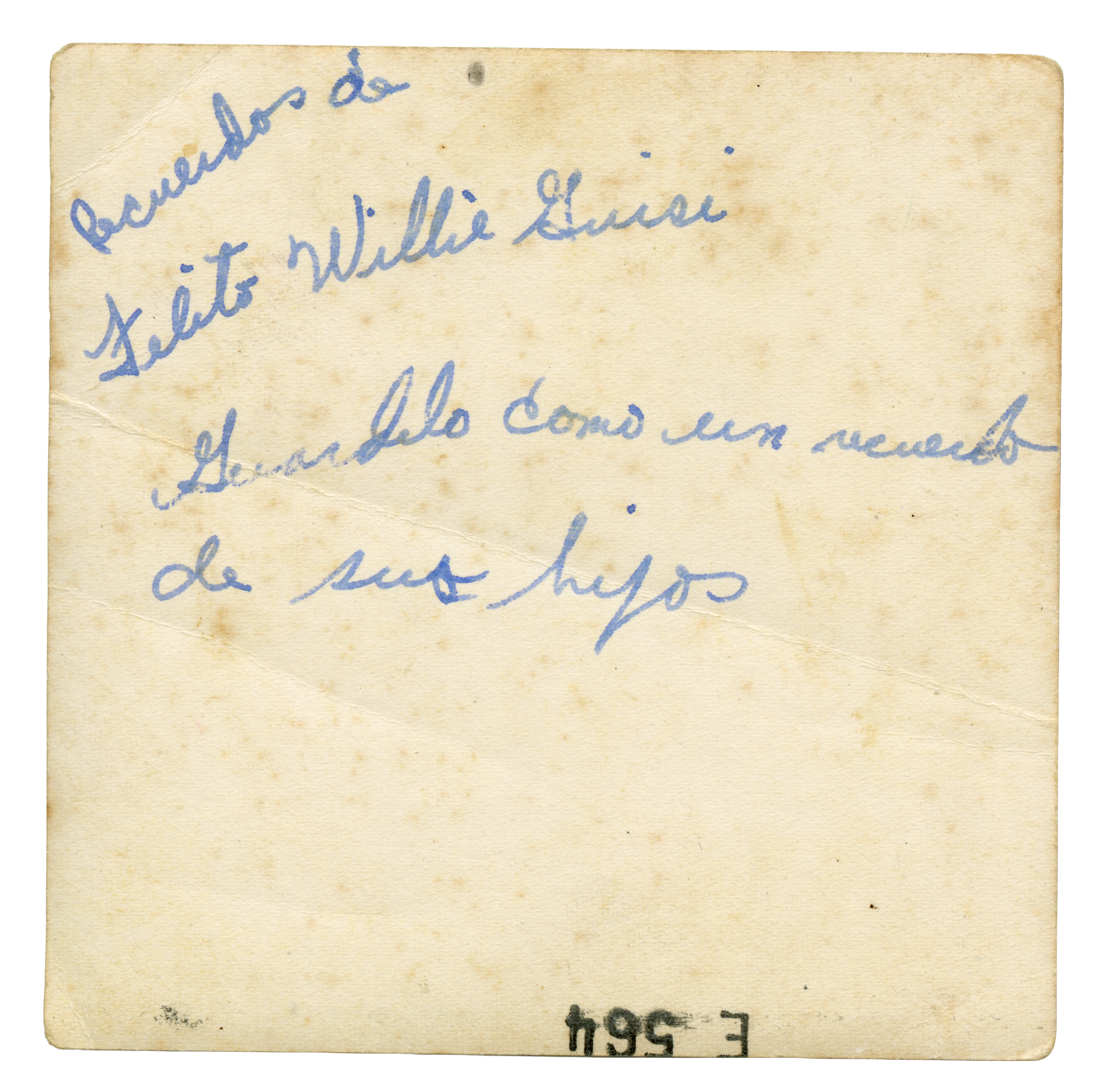
The inscription on the reverse reads: “Guárdelo como un recuerdo de sus hijos.”
Puerto Rican family wedding, Manhattan, New York — April 1957
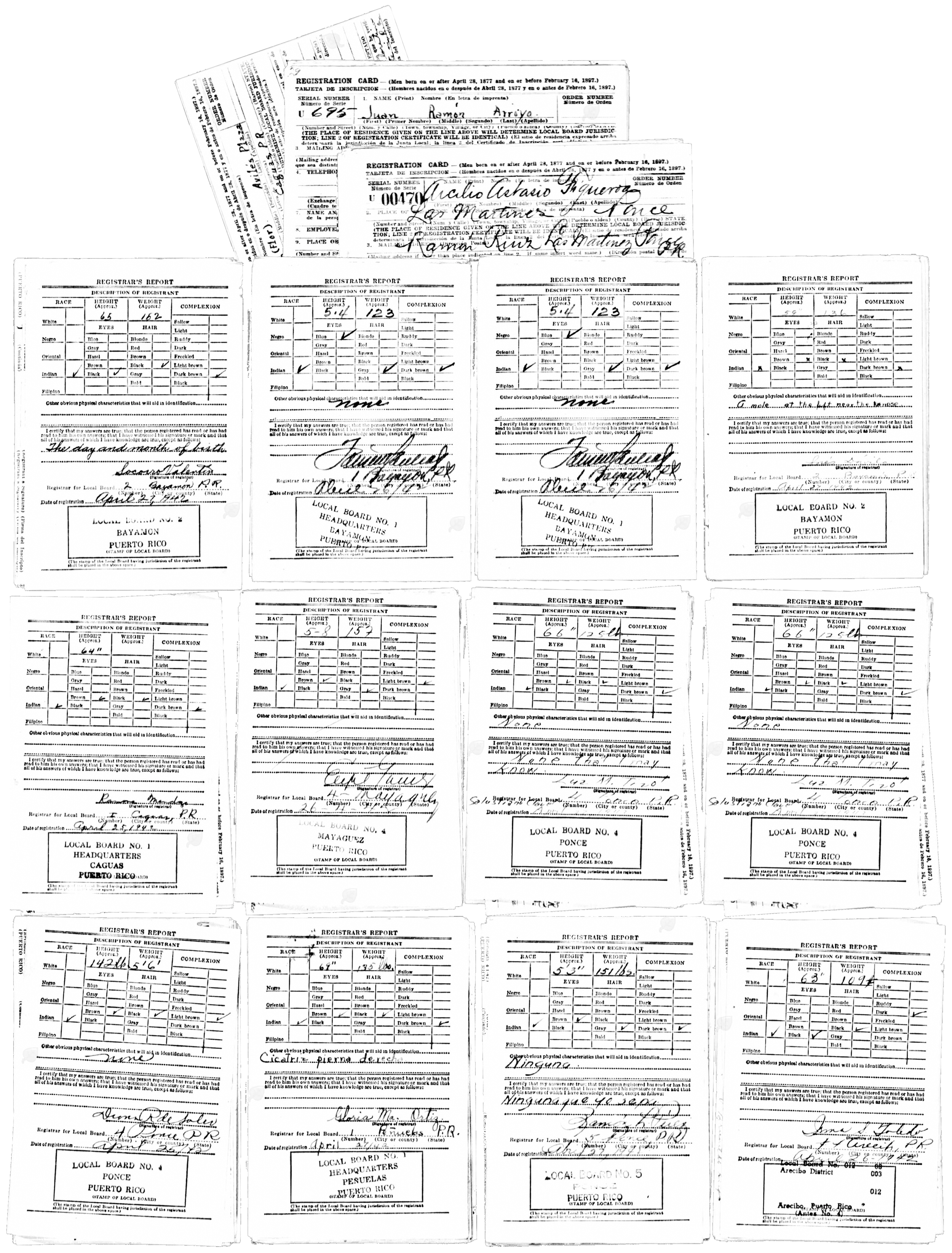
Composite assembled from U.S. World War II draft registration cards examined across six municipios. The records show individuals formally classified as Indigenous in government documents, complicating long-standing narratives that the Taíno peoples were exterminated centuries earlier.
WWII Draft Registration Cards identifying registrants as “Taíno” or “Indio,” Puerto Rico, c. 1940–1942
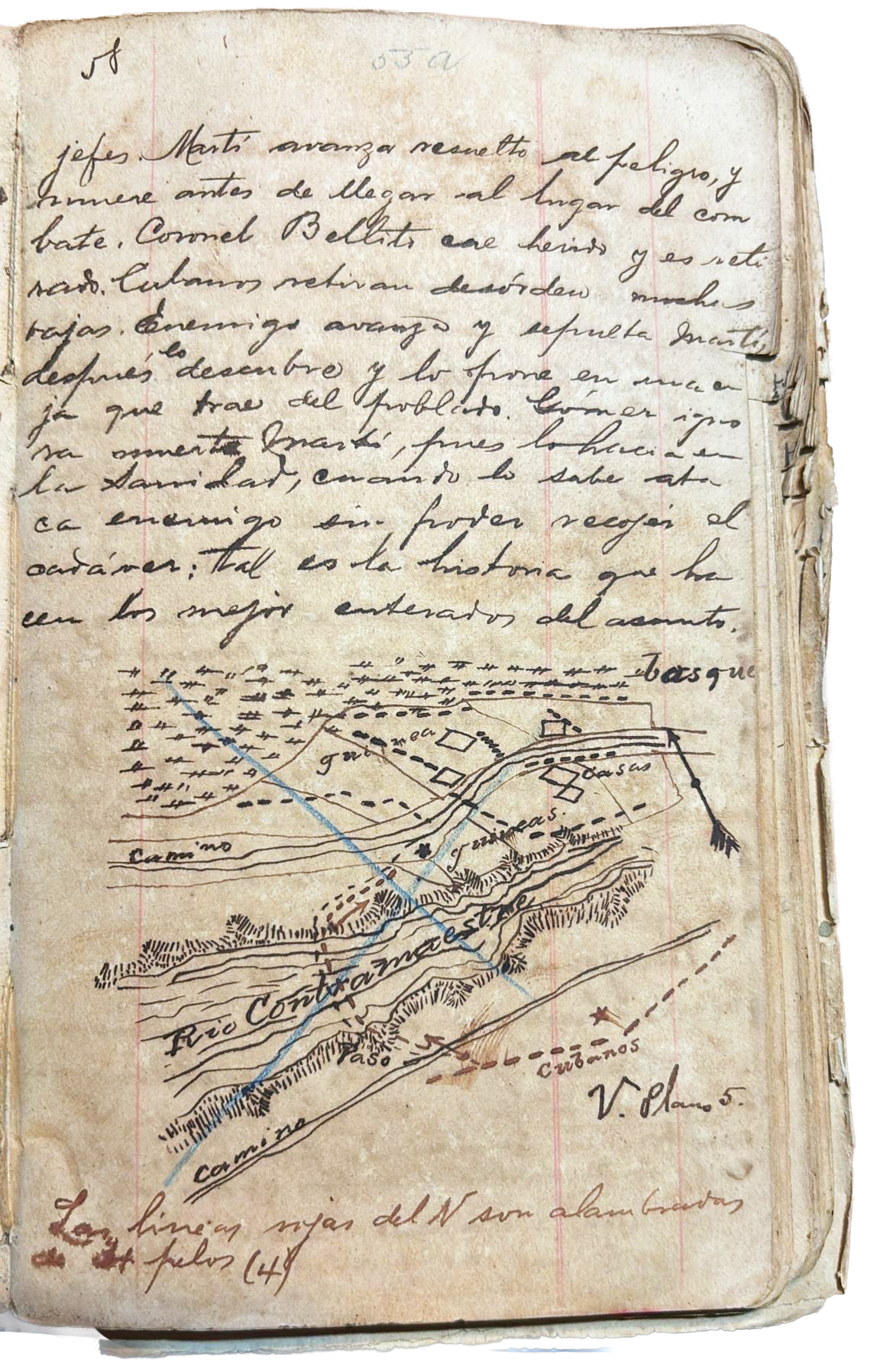
Diary of a criollo soldier during the Spanish–American War, Puerto Rico, 1897
Digitized from a privately held family archive preserved by the soldier’s descendants. The diary contains handwritten notes and a hand-drawn map documenting the conflict and the soldier’s involvement in the resistance movements to both Spanish and emerging U.S. rule.
Beyond documents and family-held materials, historical memory in Puerto Rico is also preserved through festivals, religious traditions, and communal performance. This section presents examples of field documentation produced through photography and video as part of ongoing work recording living cultural practices and oral histories across the archipelago.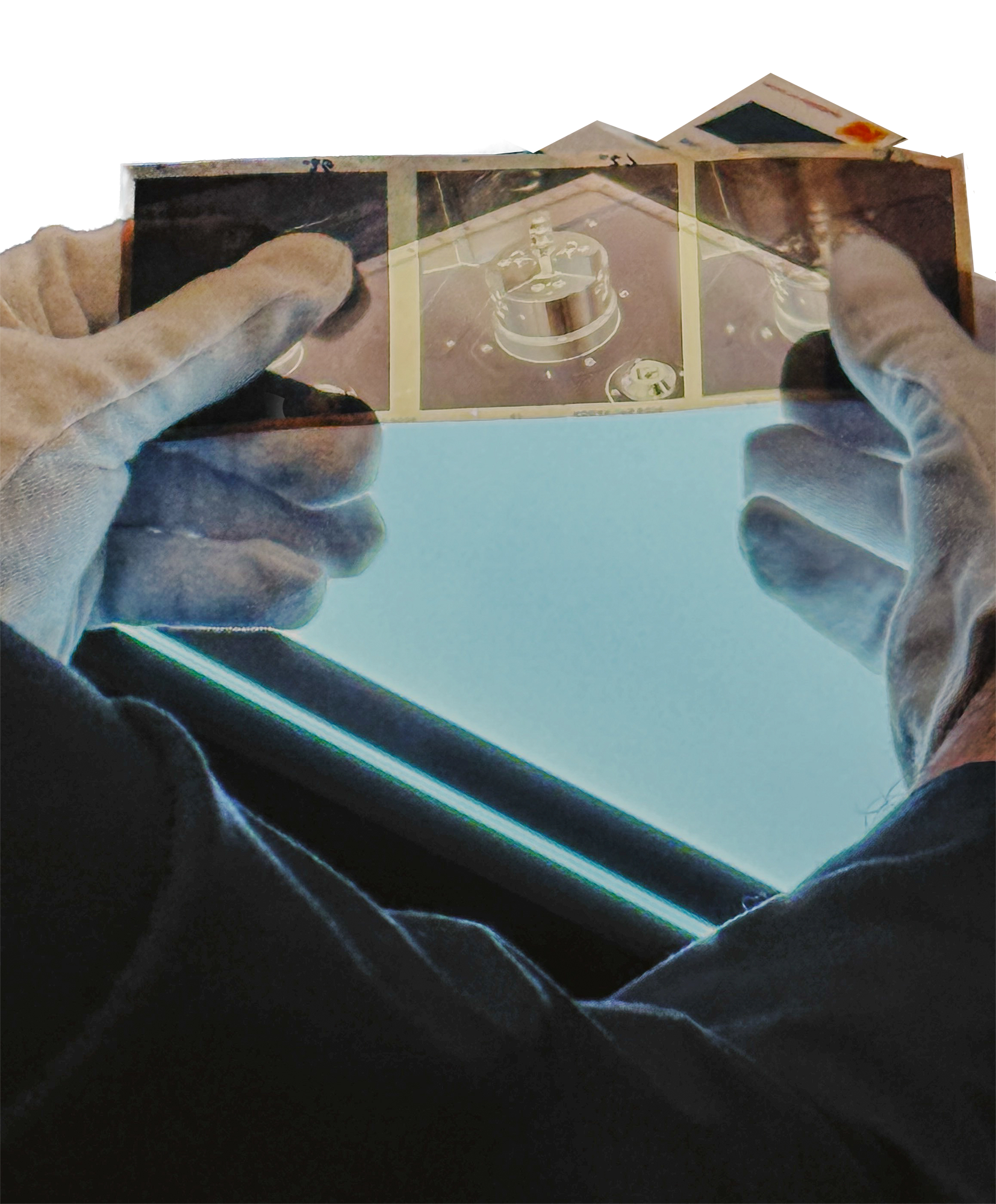
Examining photographic negatives during community digitization work.
Field documentation of archival preservation practices used to digitize family collections and community-held historical materials.
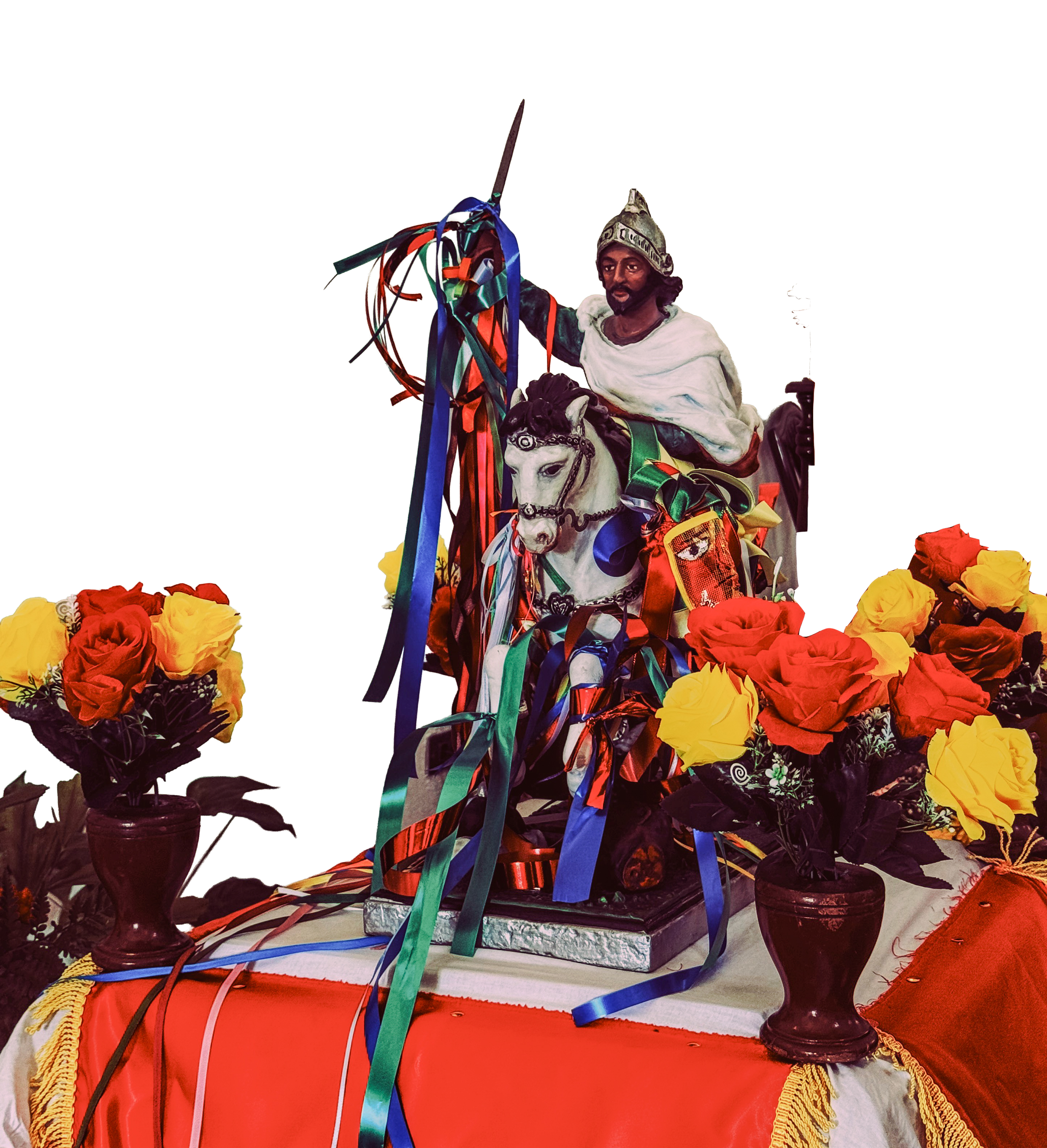
Santiago Apóstol ceremonial figure during the Fiestas Patronales, Loíza, Puerto Rico.
Photographed during fieldwork documenting patron saint celebrations in Afro-Boricua municipalities, where festivals function as living archives of cultural memory. The figure reflects Puerto Rico’s devotional santos carving tradition and is preserved by the Parroquia del Espíritu Santo y San Patricio, established in 1645.
Vejigantes at Carnaval de Ponce, Puerto Rico.
Short field footage documenting one of Puerto Rico’s oldest carnival traditions, celebrated since the mid-19th century. Handcrafted vejigante masks, passed through generations of artisans and families, preserve cultural memory through performance and masquerade.
Together, these materials reflect an archival practice that moves between family-held documents, community collections, and living cultural traditions. Through a traveling laboratory dedicated to digitization, photographic documentation, and oral history recording, the project seeks to work directly with families and communities to preserve historical materials and cultural memory that often remain outside institutional archives.
This work is ongoing.
